

This review was first published May 3, 2026 in the Pittsburgh Post-Gazette
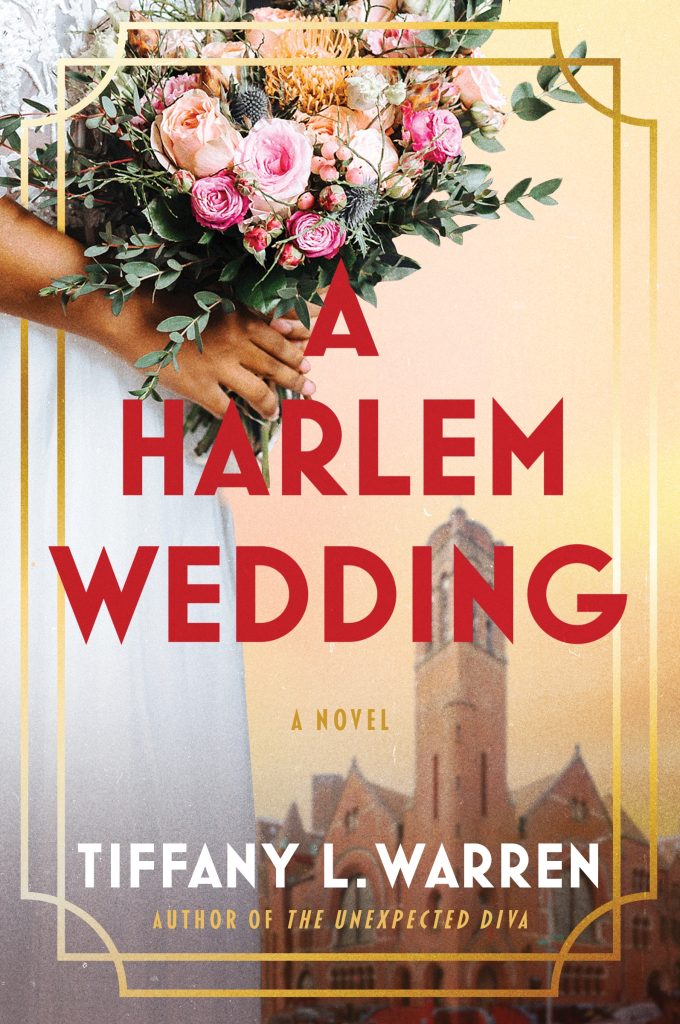
Tiffany Warren’s historical novel “A Harlem Wedding” opens with momentum: “Papa says the only way for colored people to have equality is to agitate for it.”
The book is set in the Harlem Renaissance, and its most famous Black debutante, Yolande Du Bois, speaks those words. She is the daughter of W.E.B. Du Bois, and her posh wedding to poet Countee Cullen becomes the society event of the year.
The twist? They are both in love with other people and, thanks to the gossip mill, most people know that or can see it in various interactions between the characters.
But Warren is not new to this. She is known for fiction that centers family, relationships, faith and, often, Black women.
In this book, Yolande is a Fisk graduate (like her father) and member of Delta Sigma Theta Sorority, and readers will enjoy watching her form friendships from high school throughout college. These friendships ultimately intersect.
Systemic racism, Black mobility, homophobia, mysticism – an important magic Wishing Tree is involved. This book has a lot going on.
W.E.B. Du Bois was a real-life civil rights activist and co-founder of the NAACP. He is an imposing man – all he seems to care about is his legacy, not the needs of the women in his life, and his legacy cannot be overstated.
When Yolande marries Cullen, who turns out to be not suitable for her at all (no spoilers here, but it’s a jaw-dropping moment when readers learn why), it is her dad she thinks of, even though she has misgivings about the marriage. Yet the wedding must go on, and so it does, with 3,000 attendees, 16 bridesmaids and Langston Hughes as a groomsman.
“And despite that, I floated right down the aisle to Countee. For the advancement of colored people. For a legacy. For Papa,” Yolande says, as she lays out the personal struggle that has become much more.
Yolande really likes working-class Jimmie Lunceford, who used to live with his dad on a farm in Oklahoma City. Jimmie and Yolande meet in high school and he takes her to the Brooklyn Girls’ High School promenade to her father’s obvious disapproval. Jimmie is a jazz musician, and although he is talented, a musician just won’t cut it to earn Papa Du Bois’ approval.
By the end of the novel, W.E.B. Du Bois had split with the NAACP and gone to Atlanta University to be chair of the sociology department, echoing actual events. Yolande’s mom also reveals that he had been unfaithful to her.
Sometimes the language in “Harlem Wedding” can feel a little overwrought, and readers might wonder if anyone ever actually spoke like the characters do, but Warren lays out the source material for the book – realizing that much of it is real will make it more delightful for readers.
John McWhorter, a linguist at Columbia University, has written extensively on Black English and about how, in much of literature, Black people speak is not how they ever actually spoke.
Reading “A Harlem Wedding” we know the words are the correct voice because Warren spent years doing her homework as she went through hundreds of pages of documents and letters between characters represented in the book. Regarding Jimmie, “The love of Yolande’s life,” Warren writes, “He nearly jumped out of Yolande’s letters to her father, waiting to be a part of the story.”
Warren understood the assignment. While rooted in historical fiction, this book looms large as a meditation on Black excellence and love plus the difficult negotiations Black women must navigate and what it costs to be a symbol of an idea.
In Yolande’s story, the promise of the Harlem Renaissance is inseparable from the pressure she feels – and that tension will linger long after readers finish the book.