

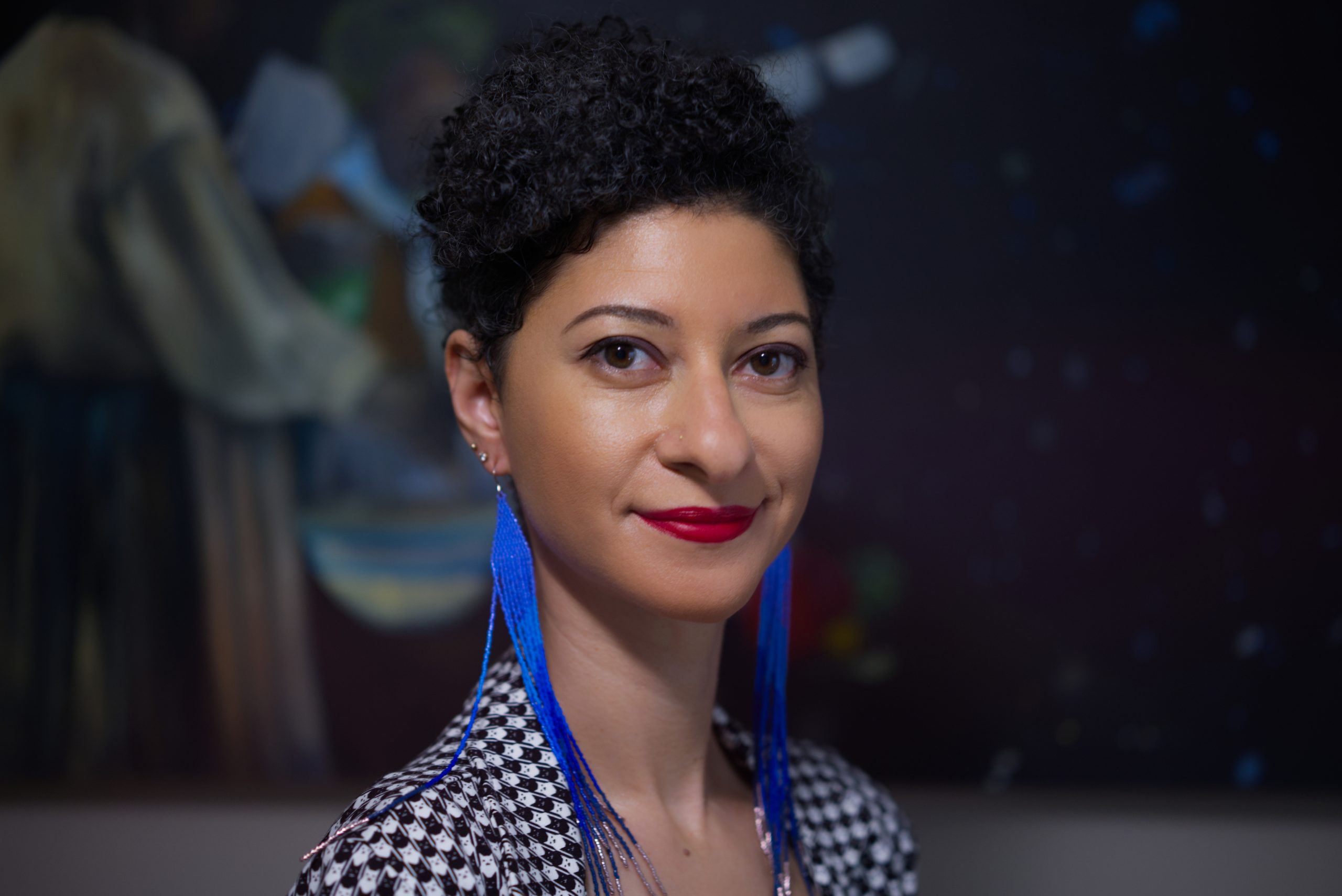
This review was first published April 19, 2026 in the Pittsburgh Post-Gazette
The publication timing of Chanda Prescod-Weinstein’s “The Edge of Space-Time” was serendipitous. Just as NASA’s Artemis II mission sent the Orion spacecraft 252,756 miles from Earth – with the first Black astronaut, Victor Glover, and the first woman to travel to the moon, Christina Koch – the book makes a powerful case for physics as a vital lens through which everyone can explore the universe.
In her award-winning debut, “The Disordered Cosmos,” Prescod-Weinstein shared her love of physics, but in “The Edge of Space-Time,” the cosmologist and particle physicist has a difficult mission: Teach readers (some who may love science and others who may not) about how the cosmos works and came to be, all through the lens of Black feminist thought.
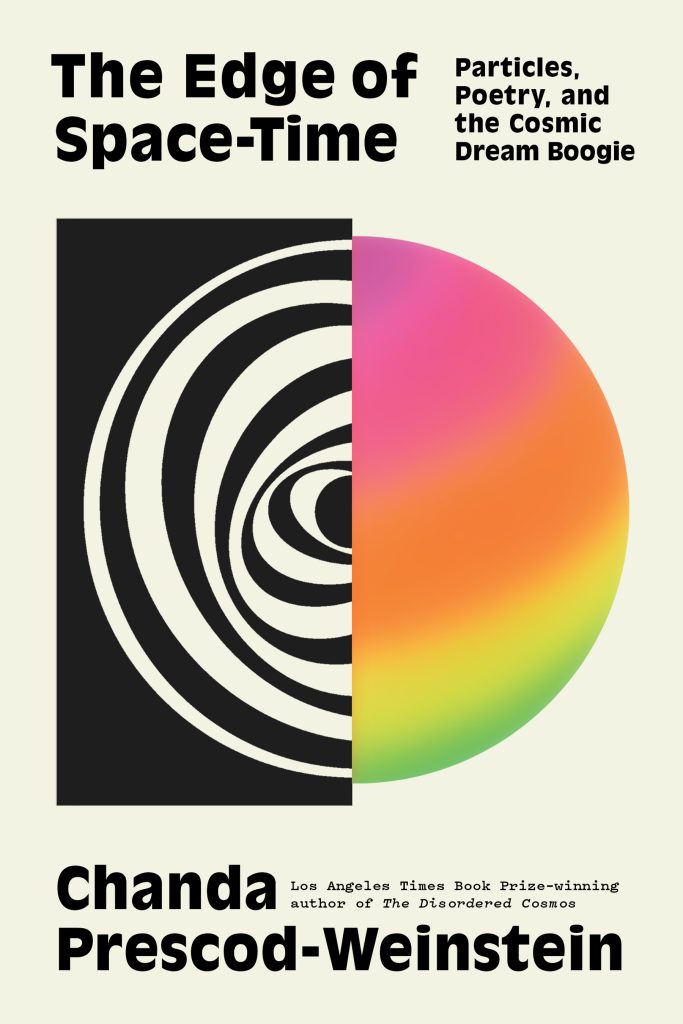
Not only is her goal accomplished, but also she has fun doing it, and readers will sense her joy.
“The book you are reading is about the queer, poetic wonder that is our universe and what we gain when we look at it from the margins,” she writes, and right from the start readers realize that this might not be the space book they expected, in the best possible ways.
She asserts that “The Edge of Space-Time” is “part of a larger tradition that includes not just scientists but also artists.”
Seemingly disparate things, she backs up her contention and, for the non-science-oriented reader, she spins extraordinary analogies, as she takes each concept of theoretical physics step-by-step and breaks it down. From Langston Hughes to Robert Frost, R.E.M., Spider-Man, “Alice’s Adventures in Wonderland,” the 808 drum machine and Jackie Robinson, Prescod-Weinstein pulls out decades of pop culture and historical references to make her points.
Sprinkled within her delight, she explores the colonial past of space exploration, drawing on personal experience, such as watching “Star Trek: Deep Space Nine”
She connects the humanities, such as poetry and art (with nods to poets such as Nikki Giovanni and Adrienne Rich) to space exploration and the origin of space-time, so that readers can better understand themselves, and society.
The book makes complicated concepts so relatable, readers once wary of the cosmos because of its vast nature, can finally wrap their brains around it in digestible pieces. Her observations of the cosmos often transcend the confines of the pages and relate to life:
“Time, as those of us who are middle-aged and older are especially aware, goes in only one direction – we can time-travel to the next moment in our lives, but never to any previous ones,” she wrote. “We are forced into the next moment, even when we don’t want to be there.”
This is a little-bit-at-a-time book, and each chapter should be relished and pondered, processed and thought about over time. Readers will need a calm space to sit vigil with ideas they once thought were true.
Prescod-Weinstein also does not shy away from the political and calls out SpaceX founder Elon Musk as one of three billionaires “who have launched a space company that claims to be rooted in humanitarian impulses yet looks, for all the evidence, like a power-hungry vanity project.”
“As a Black Jew who thinks capitalism is trash,” she wrote, “I’m worried about how the satellites may be used to surveil and eventually support efforts to round people like me up.
“I am keenly aware that these satellites have materially damaged our ability to observe the night sky. Even if I am personally allowed to keep doing science, what if my science is foreclosed on by billionaires who blight our sky?”
Physics, she shows us, is not merely a field of study but a way of seeing the cosmos – one that can open the universe to everyone. In the end, only Prescod-Weinstein could write “The Edge of Space-Time,” because, even as it embraces Black and queer culture, the lens through which readers will see the cosmos is purely hers.